Kentucky Music Hall of Fame
2024 Inductee
Gary Stewart
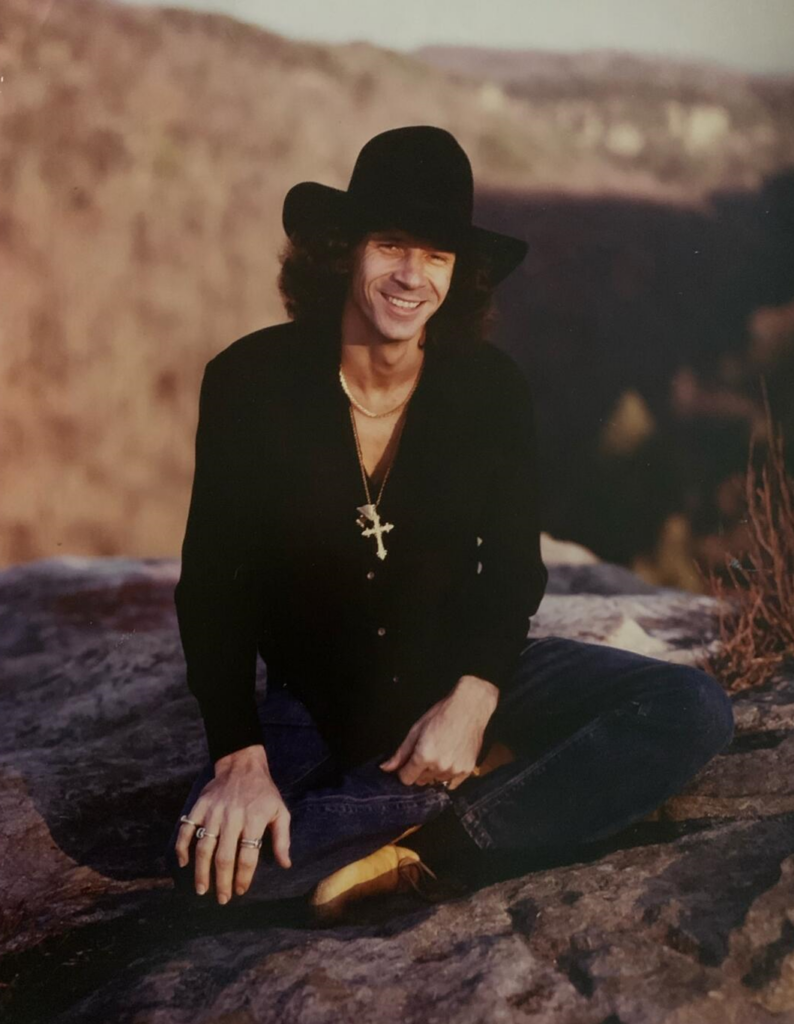
Gary Stewart, the man they called the “King of the Honky-Tonks,” was born in the coal mining town of Dunham, Kentucky on May 28, 1944. “I was raised on a mother’s love, soup beans, corn bread and taters,” Stewart once wrote. One of eleven children, Stewart’s father was a coal miner and his mother an Avon lady. The family moved to Jenkins when Gary was four, settling in the area called Payne Gap. After his father George got hurt in a mining accident, the Stewarts relocated to Fort Pierce, Florida in 1957. Gary was 12.Kentucky would remain close to Gary’s heart, and he used his life in Kentucky as inspiration for such classic Stewart songs as “Easy People” and “Harlan County Highway.”
In the late sixties Gary started traveling to Nashville, making a name for himself as a songwriter and co-writing hits with Bill Eldridge for such artists as Billy Walker, Jack Greene, Del Reeves and Cal Smith. After hearing the Allman Brothers, Stewart abandoned his Music City career to pursue a new honky-tonk sound back home in Florida. Roy Dea, a producer at RCA, coaxed Stewart back into recording, and this began a run of hits for Stewart, including “Drinkin’ Thing,” “Out of Hand,” “Your Place or Mine,” and “She’s Actin’ Single (I’m Drinkin’ Doubles),” which went to Number One in December, 1975. These records were a return to a hard-core honky-tonk sound for Nashville, and Gary’s thrilling, anguished vibrato combined with Dea’s tough, gutsy production made for some of the most electrifying country records of all time. Stewart was adept at combining country, bluegrass, rock and blues into a sound distinctly his own. Willie Nelson, Tanya Tucker, Dean Dillon, Dwight Yoakam, Vince Gill, Charley Pride, the Clash and Bob Dylan all became fans, with Dylan declaring Gary’s 1977 hit “Ten Years of This” a personal favorite.
Out on the road, Stewart took his honky-tonk sound even further, delivering raw, wild shows while touring with such bands as the Drugstore Cowboys and the Honky-Tonk Liberation Army, packing Texas honky-tonks like Gilley’s and Billy Bob’s. He’d always make it a point to return to Kentucky, playing Marlow’s Country Palace in Pikeville and Star Musicland in Paintsville. Stewart also developed a big Native American following and he’d play reservations all over the South and Southwest.
In the late seventies/early eighties, Gary recorded with both Gregg Allman and Dickey Betts, cut two duet albums with Dean Dillon, and co-wrote the Hank Williams, Jr hit “Leave Them Boys Alone” with Dillon and Tanya Tucker, which went to #6 in 1983. Stewart had no interest in being a big star and resisted playing the bigger venues, preferring to play hole-in-the-wall honkytonks in the South where he wasn’t far away from his family – wife Mary Lou and children Joey and Shannon. “I love my family as much as my music,” he’d say.
Gary rabid following enabled him to tour the honky-tonks for the rest of his life. Stewart enjoyed a brief resurgence in the late 80s/early 90s when he recorded three albums for HighTone Records. One song that came out of the was the mournful “An Empty Glass,” co-written by Dean Dillon. While it wasn’t a big hit, “every band in Texas plays that song,” Dillon maintained. “To this day, when you close a show in Texas, it’s ‘An Empty Glass.'” In 1998, the state of Kentucky awarded Gary a sign near his birthplace on Route 23, the Country Music Highway. Stewart was deeply moved by the honor. “I’m proud to be from Letcher County, Kentucky,” he liked to say.
Gary Stewart passed away December 16, 2003, but his influence continues to grow among newer artists, such as Cody Johnson, who recorded “She’s Actin’ Single (I’m Drinkin’ Doubles)” in 2022 and Mike and the Moonpies, who recorded a tribute album Touch of You: The Lost Gary Stewart Songs in 2020.Gary Stewart was a “honky-tonk man with a honky-tonk heart – and just a great human being, too,” said Tanya Tucker. “Man, ain’t nobody could ever sing honky-tonk music like Gary Stewart. One of the greatest country singers of all time. The king of honky-tonk music. There was nobody better.” – Jimmy McDonough